 EN
EN  ES
ES 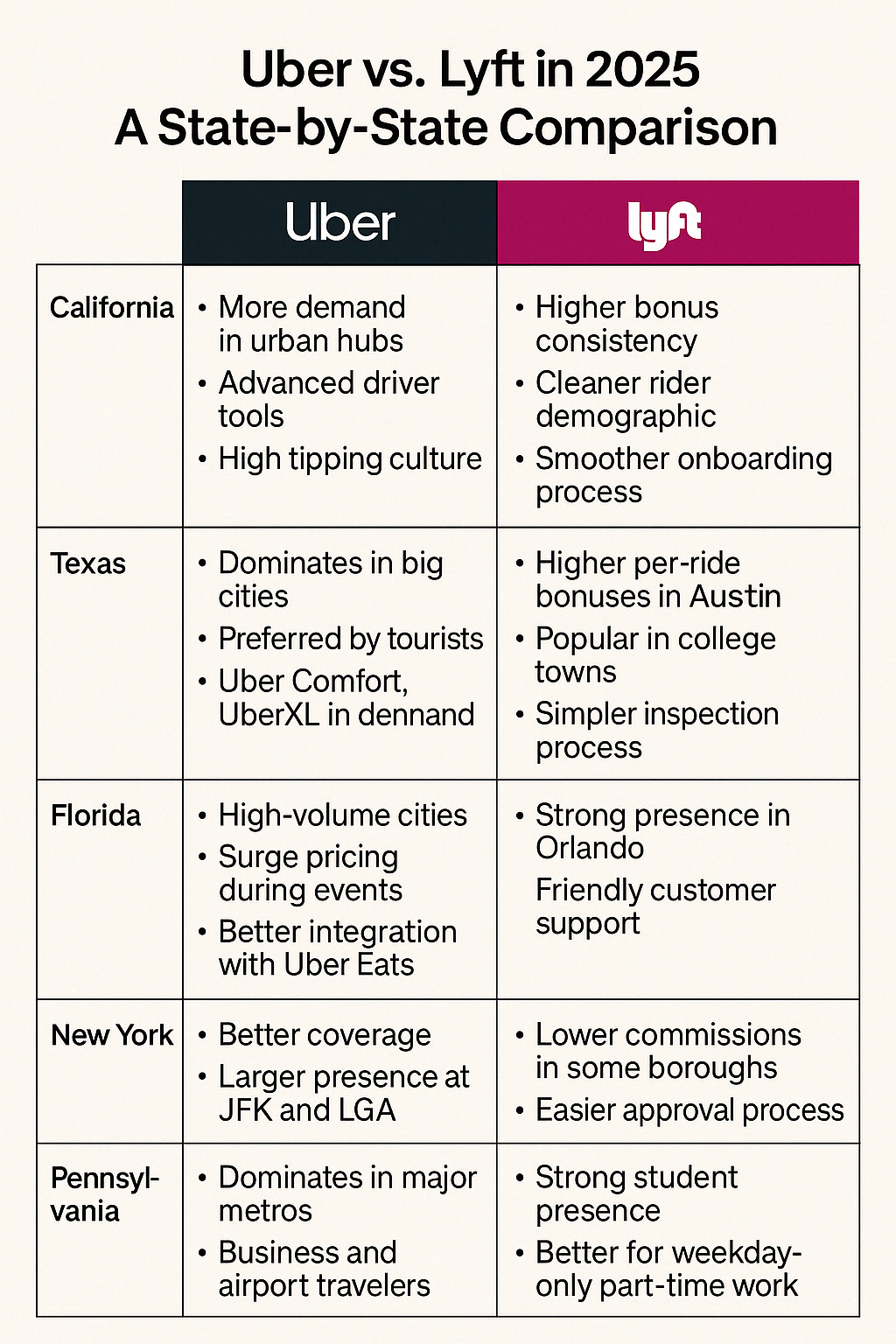
In the ever-competitive gig economy, Uber and Lyft remain the two dominant players in the rideshare space. While they offer similar services on the surface, differences in market penetration, driver incentives, customer demand, and operating costs vary dramatically across states. For current and aspiring drivers, choosing the more profitable platform isn’t a one-size-fits-all decision—it depends on where you drive.
This article breaks down the advantages and disadvantages of driving for Uber vs. Lyft in the five largest U.S. states by population: California, Texas, Florida, New York, and Pennsylvania.
🏆 Overall Summary: Uber vs. Lyft 2025
Feature | Uber | Lyft |
|---|---|---|
Market Share (US) | ~76% | ~24% |
Rider Demand | Higher nationwide | Moderate, regionally strong |
App Stability | More robust and featurerich | Simpler and easier for new drivers |
Promotions &
Bonuses | Competitive but variable | Often more consistent and
predictable |
Passenger Ratings | More sensitive, stricter rules | Slightly more forgiving |
Support Quality | Broader infrastructure | Faster in some smaller markets |
📍 California: The Epicenter of Rideshare Innovation
Uber Pros:
- More demand in urban hubs like Los Angeles, San Diego, and San Francisco
- Advanced driver tools (trip radar, destination filters)
- High tipping culture and long-distance airport runs
Lyft Pros:
- Higher bonus consistency and guaranteed pay options in SoCal
- Cleaner rider demographic in select areas
- Smoother onboarding process
Verdict: Uber has the edge in demand and long-term earning potential, but Lyft can offer higher hourly earnings during peak promos, especially in the Bay Area and Orange County.
📍 Texas: Big Cities, Big Opportunities
Uber Pros:
- Dominates in Dallas, Houston, and Austin
- Preferred by tourists and airport travelers
- Uber Comfort and UberXL more in demand
Lyft Pros:
- Higher per-ride bonuses in Austin
- Popular in college towns (e.g., San Marcos, Denton)
- Simpler inspection and onboarding process in TX
Verdict: Uber has the larger market, but savvy drivers report earning more per hour with Lyft during promo-heavy weekends in Austin and Houston.
📍 Florida: Tourism Meets Traffic
Uber Pros:
- High-volume cities like Miami, Orlando, and Tampa
- Surge pricing during events, storms, and theme park travel
- Better integration with Uber Eats for off-hours
Lyft Pros:
- Strong presence in Orlando, especially near theme parks
- Friendly customer support and more driver-friendly app design
Verdict: Uber wins overall for demand and flexibility, but Lyft is ideal for part-time drivers who prefer shorter rides or less pressure.
📍 New York: Regulated but Rewarding
Uber Pros:
- Better coverage and premium ride volume
- Larger presence in JFK and LaGuardia travel
Lyft Pros:
- Lower commissions in some boroughs
- Easier approval process for part-time drivers outside of Manhattan
Verdict: New York’s TLC regulations level the playing field. However, Uber’s larger network offers more consistent income, while Lyft’s onboarding is more accessible for part-time and upstate drivers.
📍 Pennsylvania: Smaller Market, Same Competition
Uber Pros:
- Dominates in Philadelphia and Pittsburgh
- More business and airport travelers
Lyft Pros:
- Strong student presence in State College and Pittsburgh
- Better for drivers looking for weekday-only part-time work
Verdict: In PA’s major metros, Uber wins by volume, but Lyft’s focused driver incentives in college towns can outperform Uber for part-time drivers.
💡 Final Takeaways: Which Should You Drive For?
Driver Type | Best Platform | Why |
|---|---|---|
Full-time city driver | Uber | Higher demand, more trip volume |
Part-time flexible
driver | Lyft | Better promotions and onboarding
flexibility |
Suburban/rural drivers | Depends on
market | Test both for best payouts and rider density |
Fleet/airport-focused | Uber | Premium services and airport integrations |
Many successful drivers choose to operate on both platforms, switching between Uber and Lyft depending on real-time demand, surge bonuses, and personal preference. If you’re just getting started, try both for 2–3 weeks and track your earnings hour-by-hour.
Need help completing your Rideshare Inspection to drive for Uber or Lyft in your city?
✔ Get it done online, in minutes, at ONLINEVEHICLEINSPECTION.COM — no shop visit required.